Residential electrical · Central Connecticut
Electrical work done to code, and explained before it starts.
Signs you shouldn't ignore
Most electrical problems announce themselves first. Sort these by how quickly to act, from turning off a circuit tonight to planning an upgrade next year.
- Stop and call
Burning smell or scorch marks at an outlet or switch
Overheating connection. Turn off that circuit at the panel.
Call now - Stop and call
Outlet or switch plate warm to the touch
A loose or failing connection is generating heat.
Call now - Stop and call
Buzzing or crackling from the panel
Arcing inside the panel. Do not open it.
Call now - Book soon
The same breaker trips again and again
An overloaded circuit or a fault on the line.
Request a visit - Book soon
Lights dim when the AC or a big appliance starts
Voltage drop, often a sign the service is at its limit.
Request a visit - Book soon
Two-prong outlets or no GFCI near water
Missing protection that current code expects.
Request a visit - Plan ahead
Planning an EV charger, heat pump or induction range
New large loads need a capacity check first.
Request a visit - Plan ahead
A fuse box or a panel brand flagged by an inspector
Worth replacing on your schedule, not after a failure.
Request a visit - Plan ahead
Not enough outlets, extension cords everywhere
Add circuits rather than overload the ones you have.
Request a visit
Is your panel ready for what you are adding?
An EV charger, a heat pump and an induction range can each draw as much as the rest of a house. Before we install any of them, we do a load calculation on your actual service.
How capacity checks workTogether these exceed 100 amps, which is why many homes adding two of them need a service upgrade or load management. Figures are illustrative, not a calculation for your home.
How a visit works
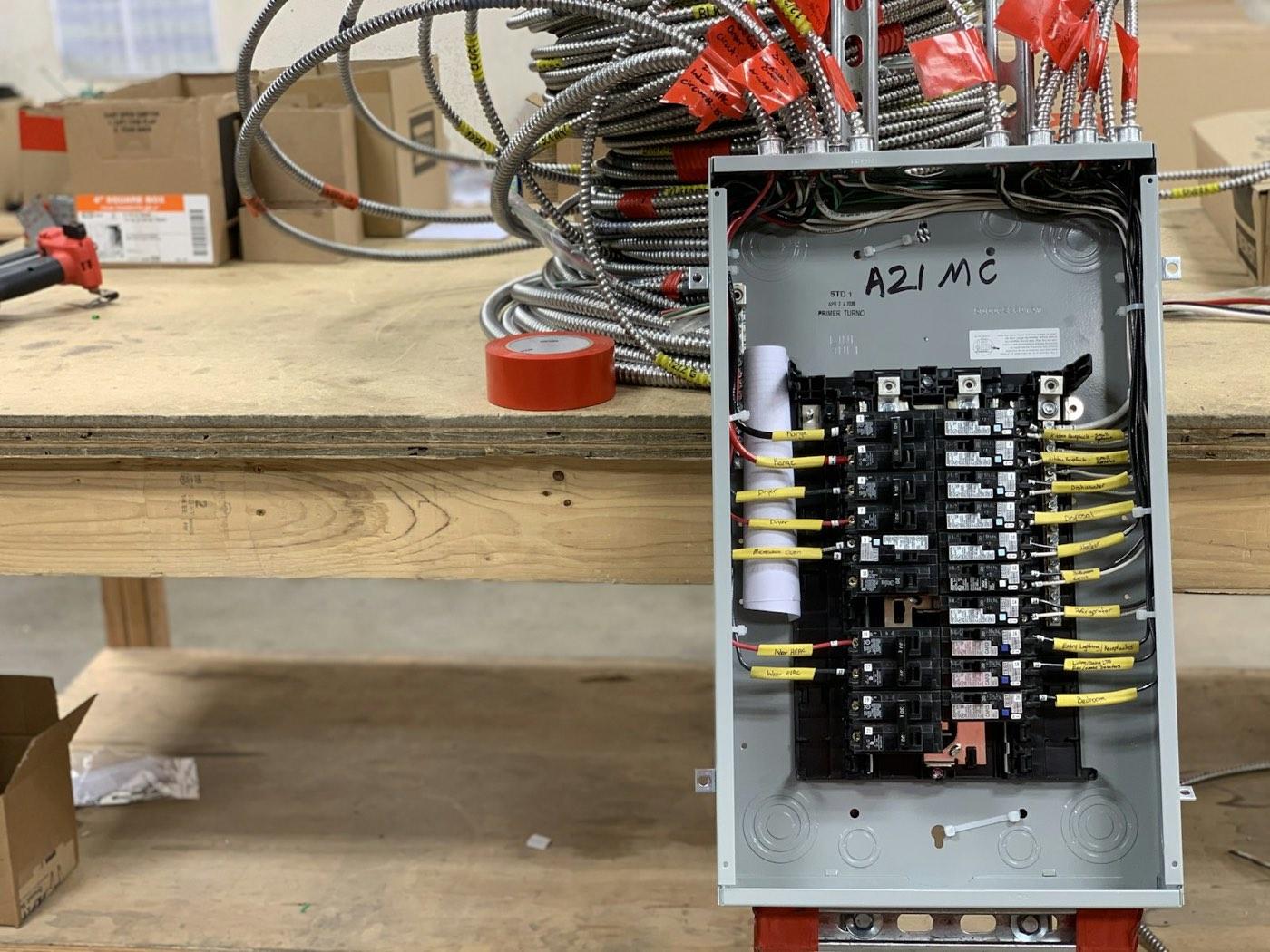
- Test first. We measure before we replace anything.
- Explain the fault. What failed, why, and whether it is a safety issue.
- Price in writing. Before work starts, including permit costs where needed.
- Permit and inspect. Pulled for work that requires it, scheduled by us.